
Moringa Oleifera: A Botanical Profile of the "Drumstick Tree"
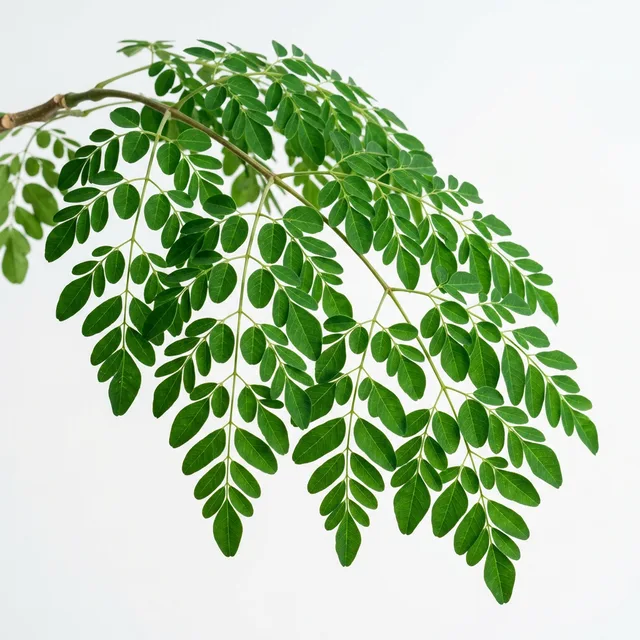
Moringa oleifera, commonly known as the drumstick tree, horseradish tree, or ben oil tree, is a fast-growing deciduous tree native to the sub-Himalayan regions of northern India. It belongs to the family Moringaceae and has been documented in traditional food systems across South Asia, Africa, and parts of Central America for centuries.
Regulatory note: This article presents published botanical and nutritional data. It does not make health claims as defined by EU Regulation (EC) No 1924/2006. No approved EU health claims exist for moringa at the time of writing.
Botanical Characteristics
Moringa oleifera can grow up to 10–12 metres tall and thrives in tropical and subtropical climates. It is drought-resistant and capable of growing in poor soils, which has contributed to its widespread cultivation in developing regions. All parts of the tree are considered traditionally usable: leaves, pods, seeds, bark, and roots.
Nutritional Composition of Moringa Leaves
The leaves of Moringa oleifera have been the subject of extensive nutritional analysis. According to data published in the African Journal of Biotechnology (Fuglie, 2001) and confirmed by subsequent studies, dried moringa leaves typically contain:
- Protein: 24–28g per 100g (including all essential amino acids)
- Iron: 25–28mg per 100g
- Calcium: 2,000–2,400mg per 100g
- Vitamin A (as beta-carotene): 16–18mg per 100g
- Vitamin C: 15–17mg per 100g (reduced from fresh due to drying)
- Potassium: 1,300–1,500mg per 100g
These values make moringa leaves one of the most nutrient-dense dried plant materials documented in scientific literature. However, it is important to note that actual consumption quantities per serving are typically 5–10g, which proportionally reduces the absolute nutrient intake.
Global Interest and Research
Moringa has been the subject of over 1,200 peer-reviewed research papers (PubMed, as of 2025), covering topics from its phytochemical profile to its use in water purification. The United Nations' World Food Programme has included moringa in discussions about addressing nutritional deficiencies in vulnerable populations.
At Manubolu, we source moringa leaves from certified farms in Tamil Nadu, India, and process them into fine powder. Read about our Moringa Powder.
Sources
- Fuglie, L.J. (2001). The Miracle Tree: Moringa oleifera, Natural Nutrition for the Tropics. Training Manual, Church World Service.
- Gopalakrishnan, L. et al. (2016). Moringa oleifera: A review on nutritive importance and its medicinal application. Food Science and Human Wellness, 5(2), 49–56. doi.org
- National Center for Biotechnology Information (NCBI/PubMed). Moringa oleifera research database. pubmed.ncbi.nlm.nih.gov