
Sustainable Sourcing in the Freeze-Dried Industry
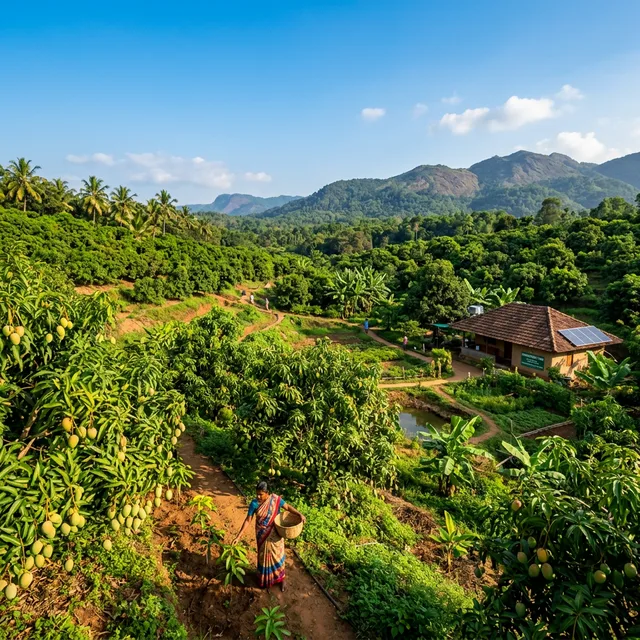
As consumer demand for transparency grows, sustainable sourcing has moved from a "nice-to-have" to a business-critical practice in the food industry. For freeze-dried ingredient suppliers, this means examining every step of the supply chain, from farm conditions and water usage to processing energy and packaging materials.
What Does "Sustainable Sourcing" Mean in Practice?
In the context of food ingredients, sustainable sourcing encompasses several interconnected areas:
- Fair farmer compensation: Ensuring that the farmers who grow the raw materials receive fair prices that allow for sustainable livelihoods.
- Environmental stewardship: Minimising the environmental footprint of cultivation, including water usage, pesticide application, and soil management.
- Traceability: Being able to trace every ingredient from the retail shelf back to the specific farm or cooperative where it was grown.
- Social responsibility: Ensuring that labour practices in the supply chain comply with international standards, no child labour, safe working conditions, and fair hours.
Challenges in the Freeze-Dried Supply Chain
The freeze-dried industry faces particular sustainability challenges. The freeze-drying process itself is energy-intensive, the vacuum chambers and refrigeration systems require significant electrical power. Addressing this typically involves:
- Investing in newer, more energy-efficient freeze-drying equipment
- Using renewable energy sources for processing facilities
- Optimising batch sizes to reduce energy waste per kilogram of output
Transportation is another factor. Freeze-dried ingredients sourced from tropical regions (India, Thailand, South America) need to be shipped to European markets. However, the weight reduction through freeze-drying (up to 90% lighter than fresh) significantly reduces the carbon footprint per nutritional unit compared to shipping fresh or frozen produce.
EU Regulatory Context
The EU's Corporate Sustainability Reporting Directive (CSRD), effective from 2024, requires large companies and listed SMEs to report on their environmental, social, and governance (ESG) performance, including supply chain practices. While this primarily affects larger companies, the reporting requirements cascade down to suppliers who must provide sustainability data to their customers.
The EU Deforestation Regulation (EUDR) also affects certain agricultural supply chains, requiring importers to prove that their products are not linked to deforestation.
What Manubolu Does
At Manubolu, sustainability is built into our sourcing model:
- Direct partnerships with small-holder farms in Southern India
- Full traceability from farm to final product
- Processing within 24 hours of harvest to minimise waste
- Registered under the German Packaging Act (VerpackG) for packaging responsibility
- LUCID Registration: DE3557161963678
Learn more about our approach: Sustainability at Manubolu or About Us.
Sources
- European Commission, Corporate Sustainability Reporting Directive (CSRD). finance.ec.europa.eu
- European Commission, EU Deforestation Regulation. environment.ec.europa.eu
- VerpackG, German Packaging Act. verpackungsgesetz.com