
Clean Label Trend: Why Ingredient Transparency Matters
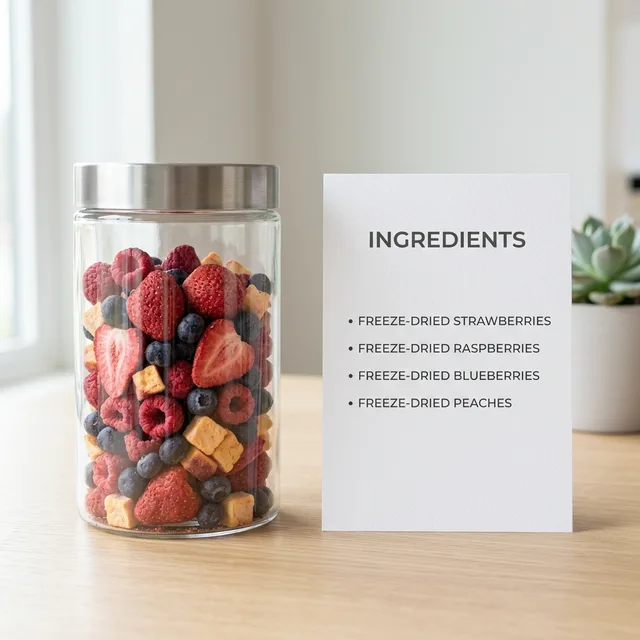
"Clean label" is not a legally defined term in the European Union, but it has become one of the most influential consumer trends in data from the last decade. In practical terms, clean label means short ingredient lists, recognisable ingredients, and the absence of artificial additives, preservatives, or E-numbers.
What Consumers Expect
According to Innova Market Insights (2024), 73% of European consumers say they "always" or "frequently" check ingredient lists before purchasing food products. The top consumer expectations that define "clean label" include:
- Recognisable ingredient names (not chemical codes)
- Short ingredient lists (fewer than 5 ingredients preferred)
- No artificial colours, flavours, or preservatives
- Origin transparency (where ingredients come from)
- Minimal processing
Why It Matters for Manufacturers
For food manufacturers, the clean label trend means reformulating products to replace synthetic additives with natural alternatives. Freeze-dried fruit powders, for example, serve as natural colouring agents (replacing synthetic dyes like E102 Tartrazine) and natural flavour enhancers (replacing artificial flavouring compounds).
A mango powder that lists simply "freeze-dried mango" on the ingredient declaration is inherently more "clean label" than a synthetic mango flavouring with multiple E-number components.
The Supply Chain Implication
Clean label extends beyond the finished product. Ingredient suppliers are increasingly expected to provide full traceability documentation, including:
- Farm-level origin records
- Processing method details
- Certificate of Analysis (COA) for every batch
- Allergen declarations
- Microbiological test results
At Manubolu, every product comes with complete documentation. Our single-ingredient freeze-dried products contain exactly one ingredient, the fruit itself. Explore our range or view our batch reports.
Sources
- Innova Market Insights (2024). Top Ten Trends in Food & Beverage. innovamarketinsights.com
- Label Insight/NielsenIQ (2023). Consumer transparency survey. labelinsight.com
- Clean Label Project. cleanlabelproject.org